Comparison guide · Published November 2026
Zebra Blinds vs Dual Roller Shades vs Silhouette Shades
Most people who ask about these three want the same thing: privacy from the street without closing out the daylight. Zebra blinds, dual roller shades and silhouette shades all do that, which is why they're often called day and night shades. They just do it in different ways, and that changes the look, the view and the price.
The short answer
Zebra blinds are one shade with sheer and solid bands that you line up for daylight or offset for privacy. Dual roller shades are two separate roller shades on one bracket, usually a lighter shade for the day and a blackout shade for the night, each raised on its own. Silhouette shades have soft fabric vanes floating between two sheers, for the softest light and the clearest view. Zebra suits most rooms and budgets, dual rollers suit rooms that need both a bright day and a dark night, and silhouettes suit living rooms and statement windows.
We make and install all three across Brampton, Mississauga, Toronto and the rest of the GTA. Below is how each one works, how they compare, and which rooms suit each.
How each one works
Zebra blinds: one shade, two kinds of band
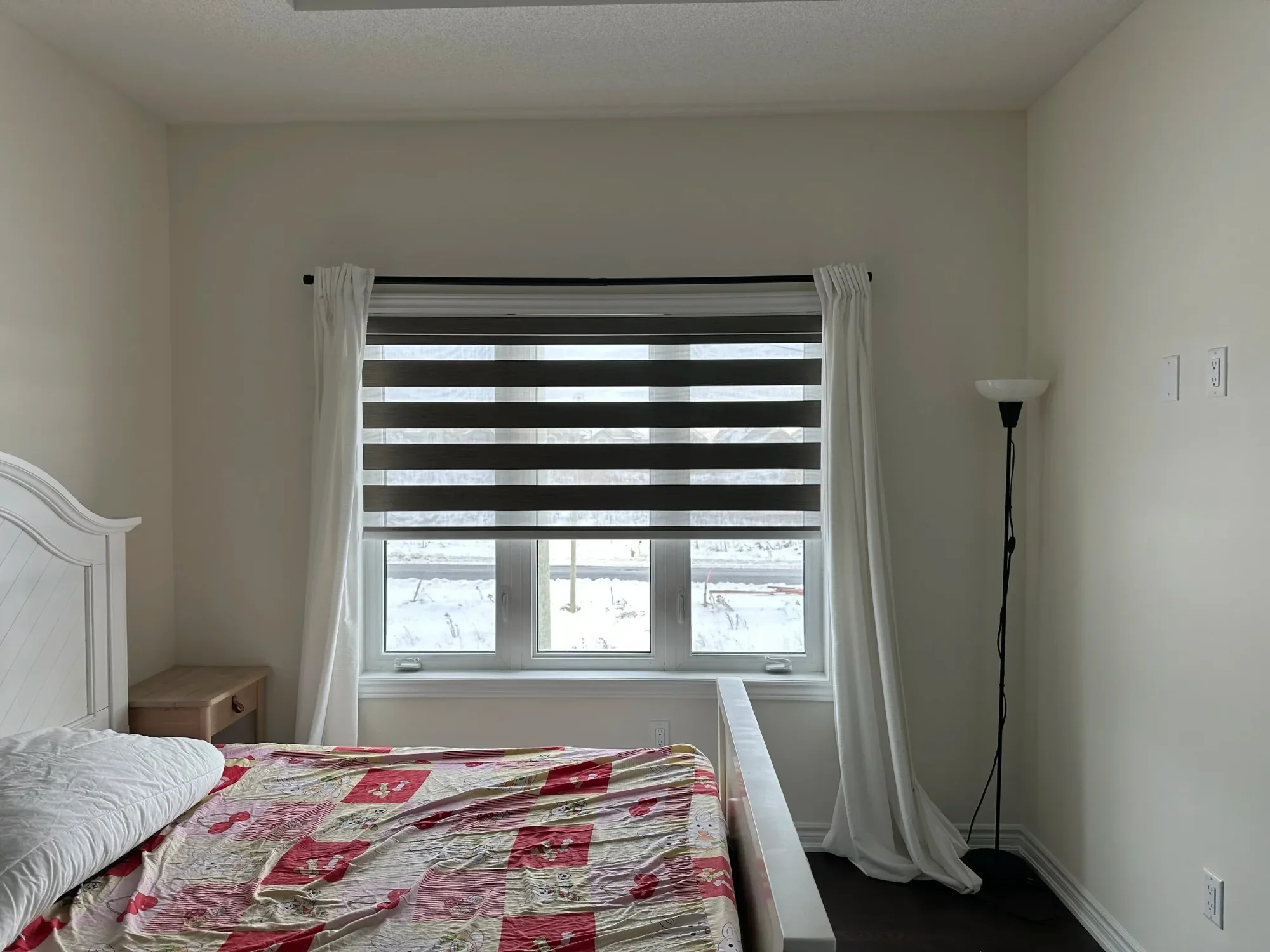
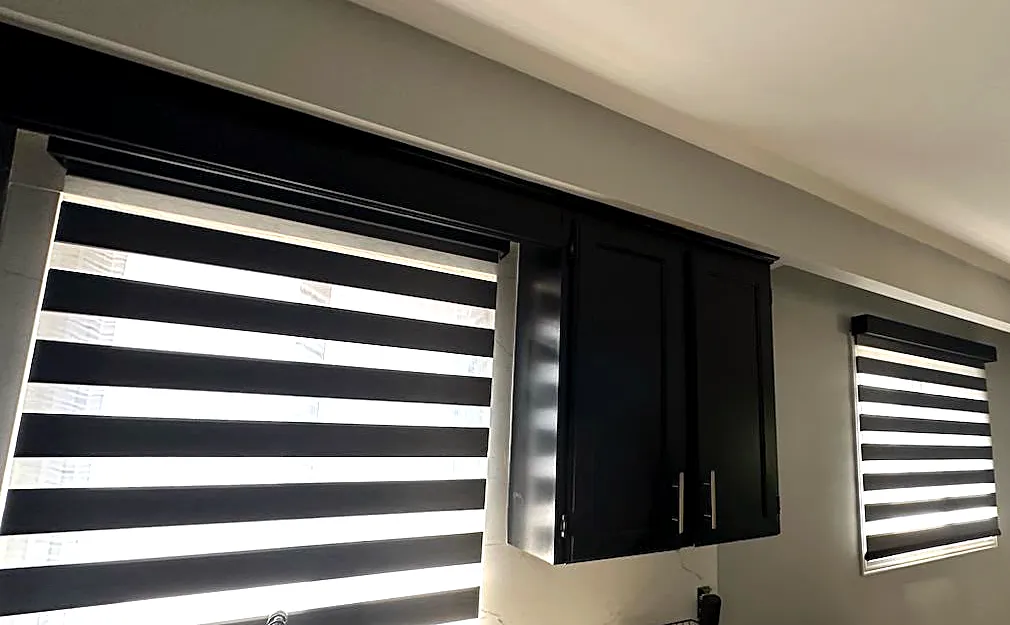
Zebra blinds, also called zebra shades, have alternating horizontal bands of sheer and solid fabric on two layers that roll together. Line the sheer bands up for filtered daylight, or shift them so the solid bands cover the sheer ones for privacy, all without raising or lowering the blind. Raise it fully when you want the whole window.
Dual roller shades: two shades on one bracket
A Dual Roller puts two roller shades in one cassette, usually a solar or light-filtering shade for the day and a blackout shade for the night. Each one raises and lowers on its own, so you can have the lighter shade down, the blackout down, or both up. Because they're ordinary roller shades, each one is a single, smooth piece of fabric with no bands or vanes.
Silhouette shades: soft vanes between two sheers
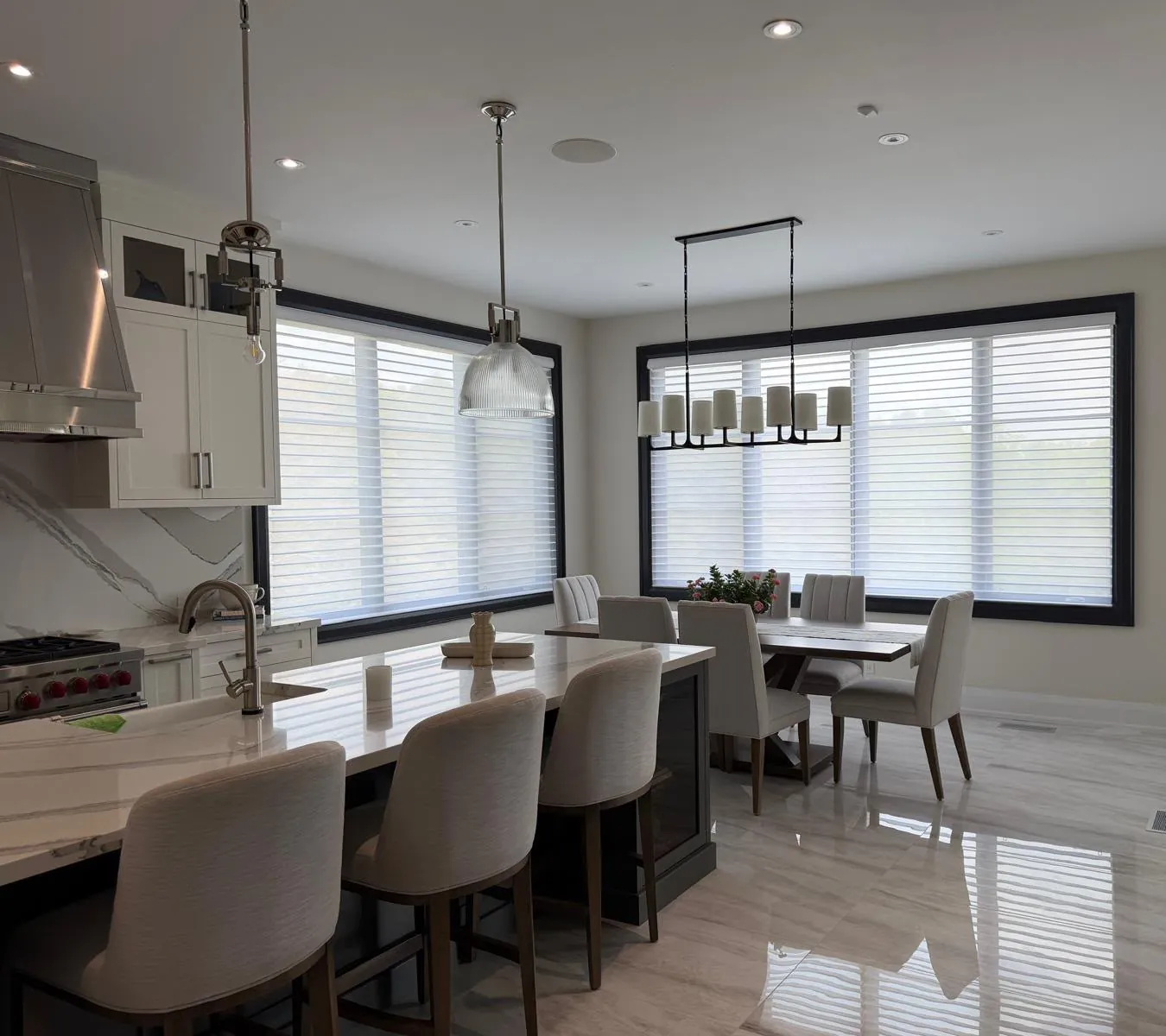
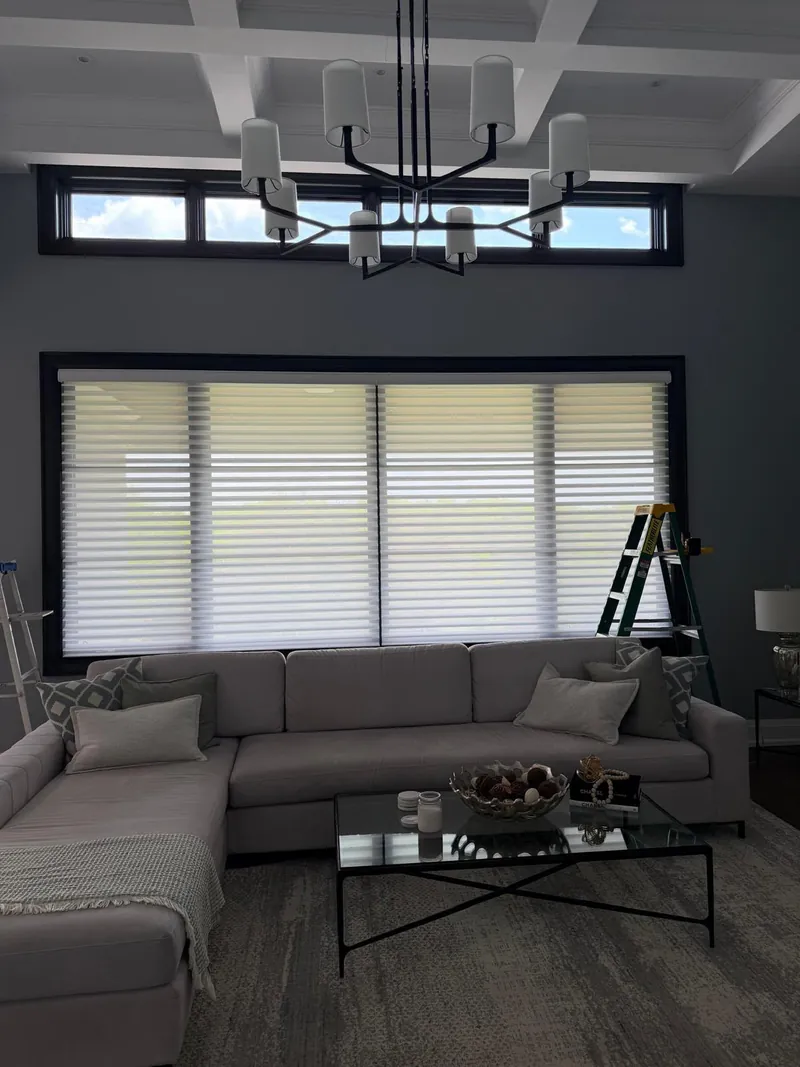
Silhouette shades have soft fabric vanes, shaped like an S, suspended between two sheer panels. With the vanes open, they sculpt daylight into a soft glow and you see out through the sheers. Rotate them closed and they block the view from outside while the sheer facings still let in soft light. The vanes come in light filtering or blackout.
Side-by-side comparison
| Zebra blinds | Dual roller shades | Silhouette shades | |
|---|---|---|---|
| How light and privacy work | Line up the sheer bands for daylight, offset them for privacy, without raising the blind | Two shades on one bracket: lower the lighter one for the day, the blackout one for the night | Open the vanes for soft light and a view; close them for privacy with light still coming in |
| View out | Through the sheer bands, or raise the blind | Clear through a solar shade during the day; raise both for the full view | Through the sheer facings with the vanes open |
| Blackout option | Yes, blackout fabrics | Yes, usually one of the two shades | Yes, blackout vanes |
| Motorization | Yes | Yes, a motor for each shade | Yes |
| Price per sq ft | About $12 to $15, before installation | From about $20 or more, before installation (two fabrics) | From about $20 light filtering, about $3 more for blackout, before installation |
| Best rooms | Living rooms, family rooms, kitchens; blackout for bedrooms and home offices | Bedrooms and any room that needs a bright day and a dark night | Living rooms, formal spaces, large and floor-to-ceiling windows |
Privacy and daylight in practice
During the day, all three give you privacy without a dark room. Zebra blinds in a light-filtering fabric give privacy with the bands closed and still let a soft glow through. Silhouette shades with the vanes closed block the view from outside while the sheer facings keep admitting soft light, which is the brightest of the three. A Dual Roller with its light-filtering shade down gives full privacy in a comfortably lit room.
At night, the rule changes. Sheer fabric that hides you in daylight lets people see silhouettes inside once your lights are on. So at night, offset the zebra bands so the solid ones are closed, close the silhouette vanes, or lower a light-filtering or blackout shade on a Dual Roller. A solar shade keeps your view by day but is see-through at night with the lights on, which is exactly why it's usually paired with a blackout shade on a Dual Roller.
Want to keep the view? Silhouettes with the vanes open, or a solar shade on a Dual Roller, let you see out during the day. Zebra blinds give you a view through the sheer bands, or raise the blind for the whole window.
Which one for which room
- Living rooms and family rooms: all three work. Most zebra customers choose a light-filtering fabric for living and family rooms. Silhouette shades are the premium choice for living rooms and formal spaces where the look matters most.
- Bedrooms: choose a blackout option. Zebra blinds in a blackout fabric keep a room dark when set correctly; a Dual Roller gives you a lighter shade for the day and a blackout shade for sleeping; silhouettes come with blackout vanes. See our blackout blinds guide.
- Home offices: glare on a screen is the problem to solve. Zebra blinds suit home offices, and many customers choose blackout there; light-filtering roller fabric is a popular office choice because it cuts glare and keeps the room bright. A Dual Roller with a solar shade cuts glare and heat while keeping your view, with a second shade for full darkness.
- Kitchens: light-filtering zebra blinds are a popular kitchen choice, and solar roller fabrics suit kitchens and south- or west-facing windows. The Guelph silhouette shades at the top of this page cover a kitchen and dining area.
- Condos: condo owners often lean toward roller shades, and a Dual Roller adds a blackout shade for floor-to-ceiling bedroom glass. Some buildings set the colour that faces out, so check your building's rules first. See best blinds for condos.
- Large windows and great rooms: silhouette shades are particularly striking on floor-to-ceiling windows and in open-concept spaces, and motorization is a popular choice on large windows. See two-storey great room windows.
Still deciding between the two most popular? Our roller shades vs zebra blinds guide compares them in more detail.
Price: how they compare
- Zebra blinds: about $12 to $15 per square foot, before installation, with premium fabrics costing more. A 36 × 60 inch window is 15 square feet, roughly $180 to $225.
- Dual roller shades: from about $20 or more per square foot, before installation. A single roller shade is about $13 to $18 per square foot; a Dual Roller costs more because you are buying two separate fabrics on one bracket.
- Silhouette shades: from about $20 per square foot with light filtering vanes, before installation. Blackout vanes are about $3 per square foot more, and some fabrics and colours cost more again.
Installation is quoted separately for every product, and motorization adds about $150 to $250 per window. The quote calculator gives you a rough number for all three, and how our pricing works explains every charge that can be on a quote.
Motorization for all three
All three can be motorized. Motors add about $150 to $250 per window. Battery motors need no wiring and recharge roughly every 5 to 8 months; hardwired motors cost more because a licensed electrician wires them, and we recommend them for hard-to-reach windows. Every motor comes with a remote; app and voice control (Google Home, Alexa, or Apple HomeKit on compatible hubs) need a smart hub.
A Dual Roller is two shades, so motorizing both means a motor for each. Motorized silhouette shades are a popular choice for living rooms and large or hard-to-reach windows. See motorization for the details.
Frequently asked questions
Are zebra blinds and dual shades the same?
Not always. Some companies call zebra blinds dual shades, but the name is also used for dual roller shades: two separate roller shades in one cassette. At Luna, zebra blinds are called zebra blinds and the two-shade system is called dual roller shades. See are zebra blinds and dual shades the same?
Which gives the most privacy during the day while still letting light in?
All three can. Silhouette shades with the vanes closed block the view from outside while the sheer facings still let in soft light. Zebra blinds in a light-filtering fabric give privacy with the bands closed and still let a soft glow through. A Dual Roller with its light-filtering shade down gives full privacy in a well-lit room, day and night. If you also want to keep your view out, silhouettes with the vanes open or a solar shade on a Dual Roller do that during the day.
Which is best for bedrooms?
Any of the three in a blackout option. Zebra blinds come in blackout fabrics and keep a room dark when set correctly. A Dual Roller usually pairs a light-filtering or solar shade for the day with a blackout shade for the night. Silhouette shades come with blackout vanes. See our blackout blinds guide.
Can all three be motorized?
Yes. Motors add about $150 to $250 per window, and every motor comes with a remote. App and voice control (Google Home, Alexa, or Apple HomeKit on compatible hubs) need a smart hub. A Dual Roller is two shades, so motorizing both means a motor for each. See motorization.
Which is easiest to clean?
Zebra blinds and roller shades are the simplest: dust them with a soft cloth or a vacuum brush attachment, and blot spots with a damp cloth and mild soap. Blackout roller fabrics with a coated backing should only be dry-dusted. Silhouette shades need the gentlest care: dust with a soft brush or a low-suction brush attachment and dab spots with a dry cloth, because the vane fabric is delicate.
Which costs the least?
Zebra blinds, at about $12 to $15 per square foot before installation. Dual roller shades start at about $20 or more per square foot, because you are buying two separate fabrics. Silhouette shades start at about $20 per square foot with light filtering vanes, and blackout vanes are about $3 per square foot more. Your free in-home consultation gives you a written quote for each, so you can compare them on your own windows.
Brampton, Mississauga, Toronto & the GTA
Privacy and daylight, on your windows
Book a free in-home consultation. We'll bring zebra, roller and silhouette samples, measure every window and leave you a written quote for each option.
Keep reading