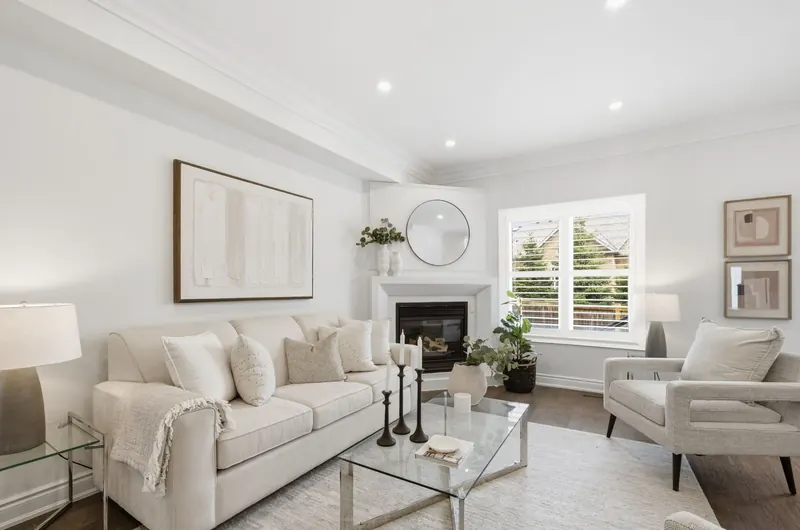
Types of Blinds: A Complete Guide for Ontario Homes
Walk into any blinds showroom and the choices pile up fast: zebra, roller, cellular, roman, wood, faux wood, sheer, shutters. Most of them look good in a photo. The hard part is knowing which one will actually suit your windows, your light and the way you use each room.
We're Luna Window Coverings, a custom blinds company based in Brampton. We measure and install window coverings in homes across the GTA, so we see what works in real rooms and what people end up replacing.
This guide walks through the main types of blinds and shades we install, with a chart that shows how much light and privacy each one gives, quick picks for every room, honest pros and cons, and what custom blinds cost.
Every type below can be custom-made for your windows. Most can also be motorized.
01Zebra blinds
Light
Light-filtering to blackout (depends on the fabric)
Privacy
Adjustable; high when closed
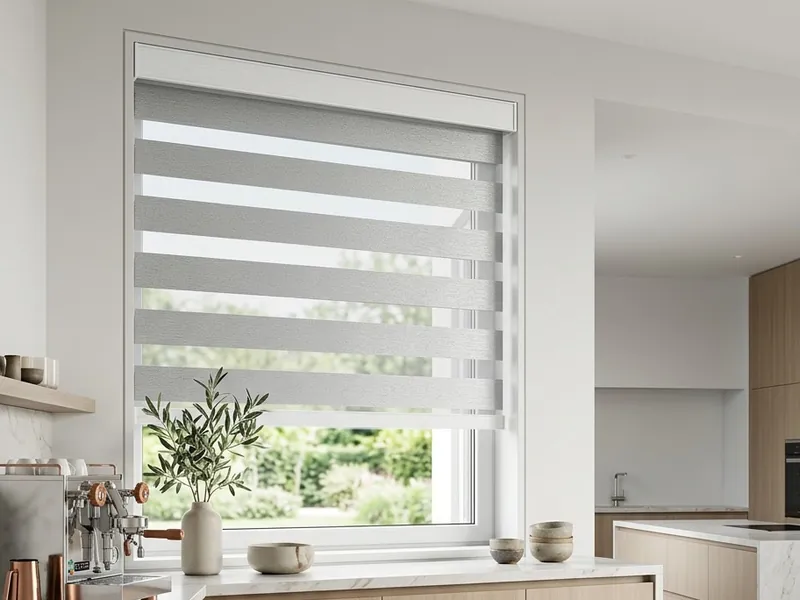
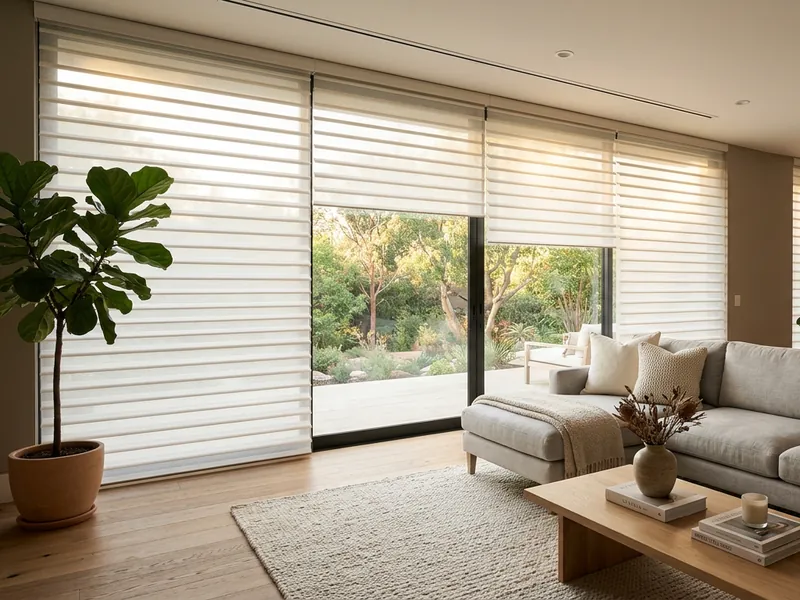
Zebra blinds have alternating bands of sheer and solid fabric on a single roller. Line the sheer bands up and soft light comes through; shift them so the solid bands overlap and the view in is closed off. You may also see them sold as dual shades.
The big plus is control without raising the blind: one pull takes the room from bright to private. With a standard fabric, a little light still glows through when the bands are closed; for a bedroom, choose a blackout zebra fabric. Dust can settle on the horizontal bands, but a soft brush clears it.
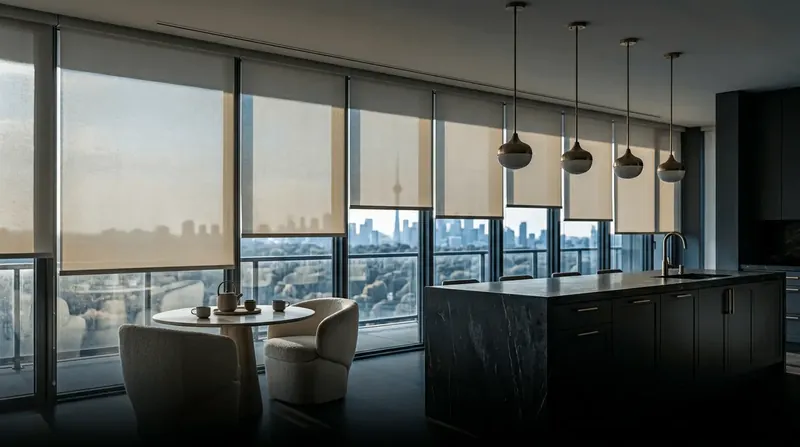
One piece of fabric that rolls onto a tube at the top of the window. The fabric decides how it performs: sheer, light-filtering, solar screen or blackout. A cassette (a cover over the roll) gives a cleaner finish.
Roller shades are clean, simple and usually the most affordable custom option. Each shade does one job, though: a solar screen keeps your view but lets people see in at night, and a blackout shade darkens the room whenever it is down. Choose the fabric for how the room is used most.
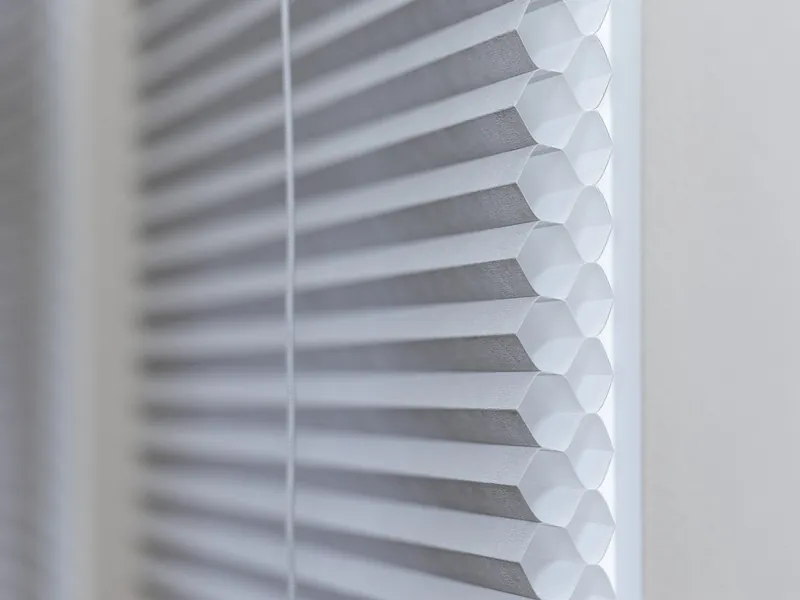
Pleated fabric folded into honeycomb-shaped cells that hold a layer of air against the window. They come in single, double and triple cell, in light-filtering or blackout fabric.
That trapped air makes them the best insulator in this guide, which counts in an Ontario winter. They also stack up small, so the top of the window stays clear. They are not the best fit for steamy rooms, and dust can settle inside the cells.
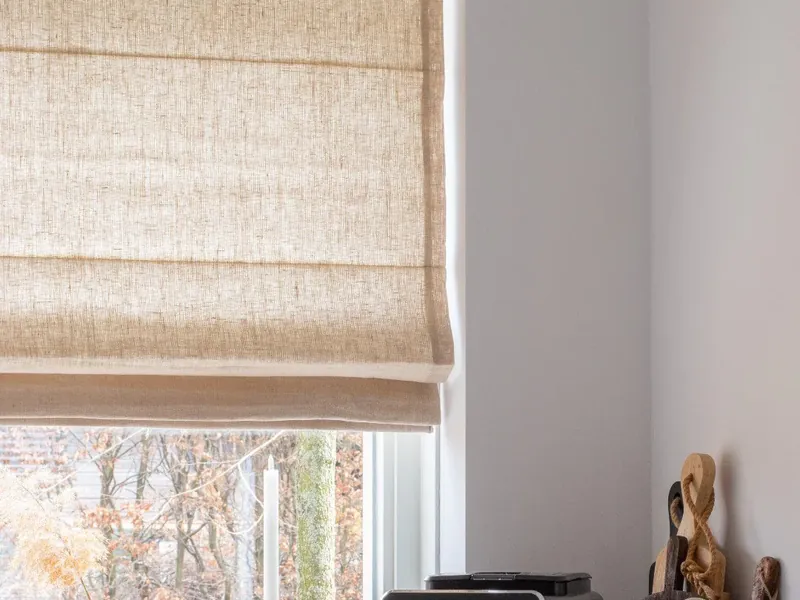
Fabric shades that gather into soft horizontal folds as they rise. Styles include flat, hobbled and relaxed folds, and a room-darkening or blackout lining can be sewn to the back.
Nothing else here looks as soft, and they can be made in almost any fabric. When raised, the folds take up more of the top of the window than a roller, they cost more, and fabric shades don't belong over a shower or sink.
Horizontal slats made from a PVC composite that looks like painted or stained wood. Tilt the slats to aim light up or down, or raise the blind to clear the window.
They won't warp in steam or humidity, which makes them the safe pick for kitchens, bathrooms and laundry rooms. They are heavier than real wood, and small gaps between the slats mean they never make a room fully dark.
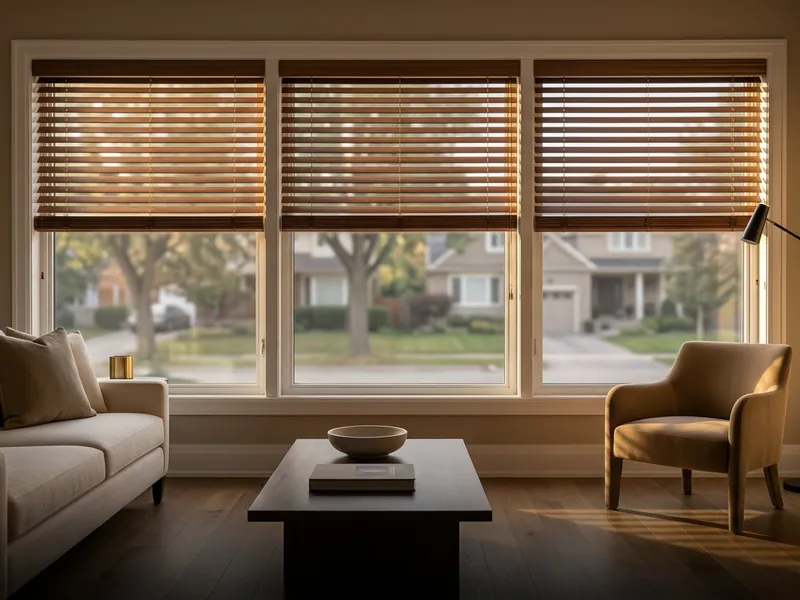
Slats of real basswood or paulownia in painted or stained finishes. They tilt and lift exactly like faux wood blinds.
Real wood has a warmth and grain that faux wood only imitates, and it is lighter. It costs more, though, and should stay out of bathrooms and away from the kitchen sink, where moisture can warp the slats over time.
Soft fabric vanes suspended between two sheer layers. Open the vanes and light glows through the sheers; close them and the direct view in is blocked.
They give the softest, most even light of any type, and they look elegant in a living room. With room-darkening vanes they also work in bedrooms. They are not a fit for humid rooms, and the delicate fabric needs gentle cleaning.
Light-filtering to blackout (depends on the fabric)
Privacy
High
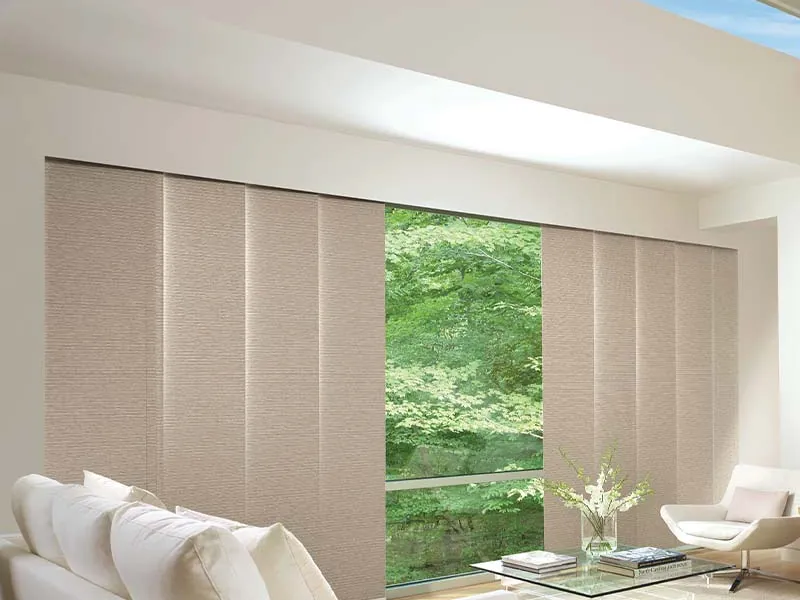
Wide fabric panels that slide side to side on a track and stack behind one another when open. They are the modern alternative to vertical blinds.
Made for sliding patio doors and very wide windows, so you can walk straight through when they are open. Plan for the stacked panels covering a strip of glass at the side when they are pulled back.
Best forSliding patio doorsWide windowsRoom dividers
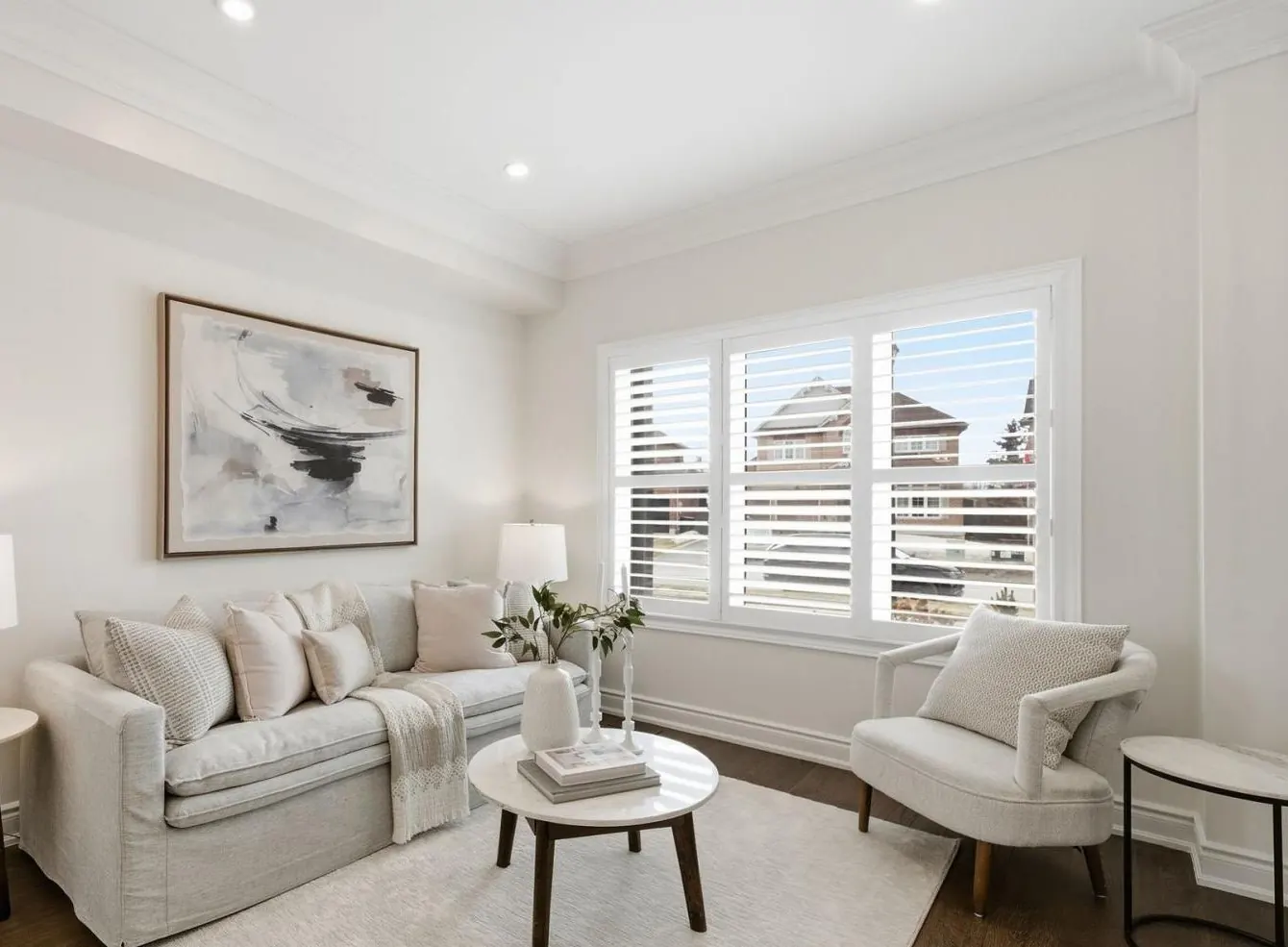
Not technically blinds, but often compared with them: louvred panels in a fixed frame that swing open like doors. They come in real wood, faux wood and aluminium. See them throughout a home in our Uxbridge shutters project.
Shutters are a lasting upgrade that suits almost any window shape, including bays and arches, and faux wood versions handle bathrooms well. They cost more than most blinds, the panels need room to swing open, and like any slatted product they don't fully black out a room.
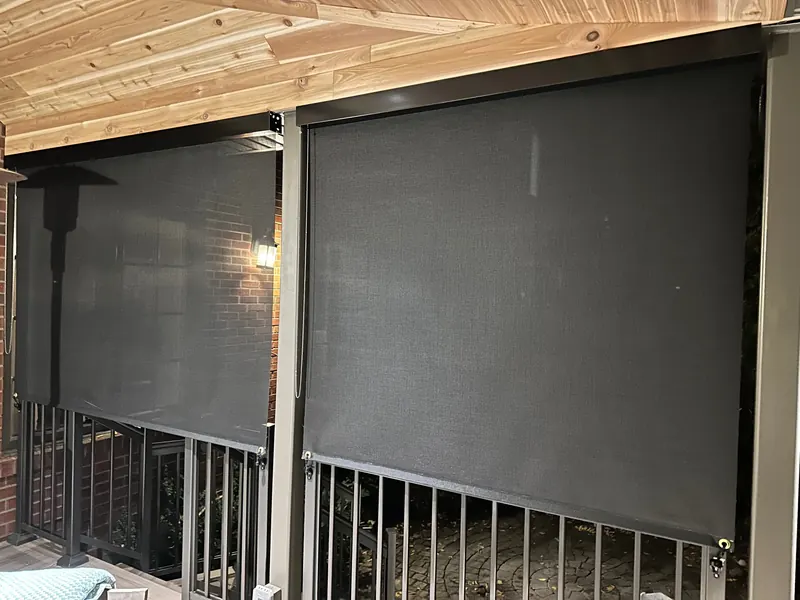
Weather-rated roller shades for covered decks, porches and pergolas, made from coated mesh, solid vinyl or blackout fabric. See a real install in our North York outdoor blinds project.
Screen fabric cuts glare and heat while you still see out; solid and blackout fabrics give full privacy and shade. They are for exterior openings only, and in windy spots the bottom bar should clip to tie-downs.
Southern Ontario asks a lot of a window covering: cold winters, humid summers and long evenings of low sun. Four situations come up in almost every home we visit.
Winter heat loss
On a cold night, the air beside the glass is the coldest air in the room. Cellular shades put a layer of trapped air between that cold glass and the room, which is why they are the type we suggest for drafty bedrooms and older windows. Double-cell is the usual choice. A blind that fits the frame closely also helps, which is one reason custom sizing matters.
Humid kitchens and bathrooms
Steam from a shower or a pot of pasta is hard on wood and fabric. Faux wood blinds and faux wood shutters hold their shape and wipe clean, so they are the safe pick for these rooms. If you'd prefer a shade in a kitchen, keep it away from the sink and choose a fabric that can be spot-cleaned.
Basement windows
Basement windows tend to be small, set high on the wall, and close to the ground outside, which means neighbours and passers-by see straight in. They also often sit in shallow or uneven frames. Compact cellular or roller shades fit these openings well, and cordless lift keeps them simple to use. We check the frame depth when we measure, so you'll know if an inside mount will fit.
Strong south and west sun
South and west windows get the most heat and glare, and that sun fades floors and furniture over time. Solar screen roller shades cut glare and UV while keeping your view. The fabric openness (often 1%, 3%, 5% or 10%) sets the balance: lower openness means less glare but a dimmer view. Remember that screens give little privacy at night, so bedrooms facing the street may need a second layer.
What custom blinds cost
Most custom window coverings run about $12 to $20 per square foot of window area. Where a window lands in that range depends on the product, the fabric and the options you choose, such as cordless lift or motorization. Installation is quoted separately, and measuring is free during your in-home consultation.
Worked example
A bedroom window that measures 36 inches wide by 60 inches high:
36 × 60 = 2,160 square inches
2,160 ÷ 144 = 15 square feet
15 × $12 to 15 × $20 = roughly $180 to $300 for that window, before installation
Every home is different, so treat this as a starting point. For a number based on your windows, try our online quote calculator or book a free consultation for a written quote.
Choosing & measuring tips
Inside mount or outside mount
An inside mount sits within the window frame for a clean, built-in look, but it needs enough frame depth and leaves thin light gaps at the sides. An outside mount covers the frame and overlaps the wall, which blocks more light and makes a small window look bigger. For bedrooms where darkness matters, an outside mount is often the better choice.
Cordless and child safety
Hanging cords are a strangulation risk for young children, and Canada's rules for corded window coverings have been strict since 2021. In homes with kids or pets, choose cordless lift or motorization so there is nothing within reach.
Motorization
Motors make sense for tall windows, windows behind furniture, and rooms where you want blinds to open and close on a schedule. Our motorized blinds run on rechargeable batteries or a plug-in adapter, so most homes don't need an electrician, and they work with remotes, wall switches, Google Home, Alexa and Apple HomeKit.
Why custom-measured fits better
Windows that look the same size are often a little different, and few are perfectly square. Store-bought blinds come in set widths, which leaves gaps or forces a cut. Custom blinds are made to each opening, so they sit evenly and close the light gaps. If you'd like to understand the process, read how to measure windows for blinds. When you book with us, we take the measurements ourselves. Arched and other specialty shapes are covered in our guide to arched blinds.
Care & cleaning by material
Fabric shades (zebra, roller, roman, sheer)
Dust with a soft brush or a vacuum on low suction with the brush attachment. Spot-clean by dabbing with a damp cloth and mild soap; don't rub, soak or machine-wash.
Cellular shades
Vacuum gently with a brush attachment. A hair dryer on the cool setting blows dust and insects out of the cells.
Faux wood blinds and shutters
Wipe slats with a damp cloth and mild soap. They can handle moisture, so a quick clean in a steamy room is fine.
Real wood blinds and shutters
Dust with a dry microfibre cloth. If you need to wipe a spot, use a barely damp cloth and dry it right away. Skip harsh cleaners.
Outdoor blinds
Brush off dirt, wash with mild soap and water, and let the fabric dry fully before rolling it up so mildew can't start.
Frequently asked questions
What is the difference between blinds and shades?
Blinds are made of slats or vanes that tilt to control light, like wood and faux wood blinds. Shades are made of fabric that rolls, folds or stacks, like roller, cellular and roman shades. Zebra blinds are called blinds, but they work like a fabric shade.
What are the best blinds for privacy at night?
Choose a fabric that is opaque when closed: blackout or room-darkening roller shades, blackout zebra blinds, cellular shades, lined roman shades, or wood and faux wood blinds with the slats tilted shut. Avoid solar screen and sheer fabrics after dark, because with the lights on inside, people can see in.
What are the most energy-efficient blinds?
Cellular (honeycomb) shades. Their cells trap a layer of air against the window, which slows heat loss in winter and heat gain in summer. Double-cell shades are a popular choice for Ontario homes, and a close, custom fit makes any type work better.
Do zebra blinds block light?
They can. Zebra blinds come in blackout fabrics as well as light-filtering ones. With a light-filtering fabric, closing the bands blocks most direct light and gives good privacy, but some light still glows through. For a bedroom or nursery, ask for a blackout zebra fabric.
What blinds are best for kitchens and bathrooms?
Faux wood blinds and faux wood shutters, because they won't warp in steam or humidity and they wipe clean. Avoid real wood and fabric shades directly over a shower, tub or sink.
How much do custom blinds cost?
Most custom window coverings run about $12 to $20 per square foot of window area, depending on the product and options. A 36 by 60 inch window is 15 square feet, so it would be roughly $180 to $300 before installation. Measuring is free during the in-home consultation, where you get an exact quote.
How long do custom blinds take?
Most orders take 2 to 4 weeks, depending on how many windows you are covering and which products you choose. Custom blinds are made to order after your windows are measured, and we confirm the timeline with your quote.
Brampton & the GTA
Find the right type of blinds for your home
Knowing the types of blinds is the first step; seeing them on your own windows is the second. Book a free in-home consultation anywhere in Brampton and the GTA, and we'll bring samples, measure every window and leave you with a written quote.