Comparison guide · Published November 2026
Plantation Shutters vs Wood Blinds: Which Is Right for Your Home?
The short answer
Choose plantation shutters if you want a permanent, built-in look on front windows and main rooms, a covering for an arched window, or something that handles moisture (in vinyl or composite). Choose wood or faux wood blinds if you want the slats to lift completely out of the way and a wide choice of stains and paint colours. Many homes use both: shutters where guests see them, blinds elsewhere.
We make and install both across Brampton, Hamilton, Mississauga and the rest of the GTA, so this isn't a sales pitch for one of them. Below is how they compare on cost, looks, moisture, cleaning and which rooms suit each.
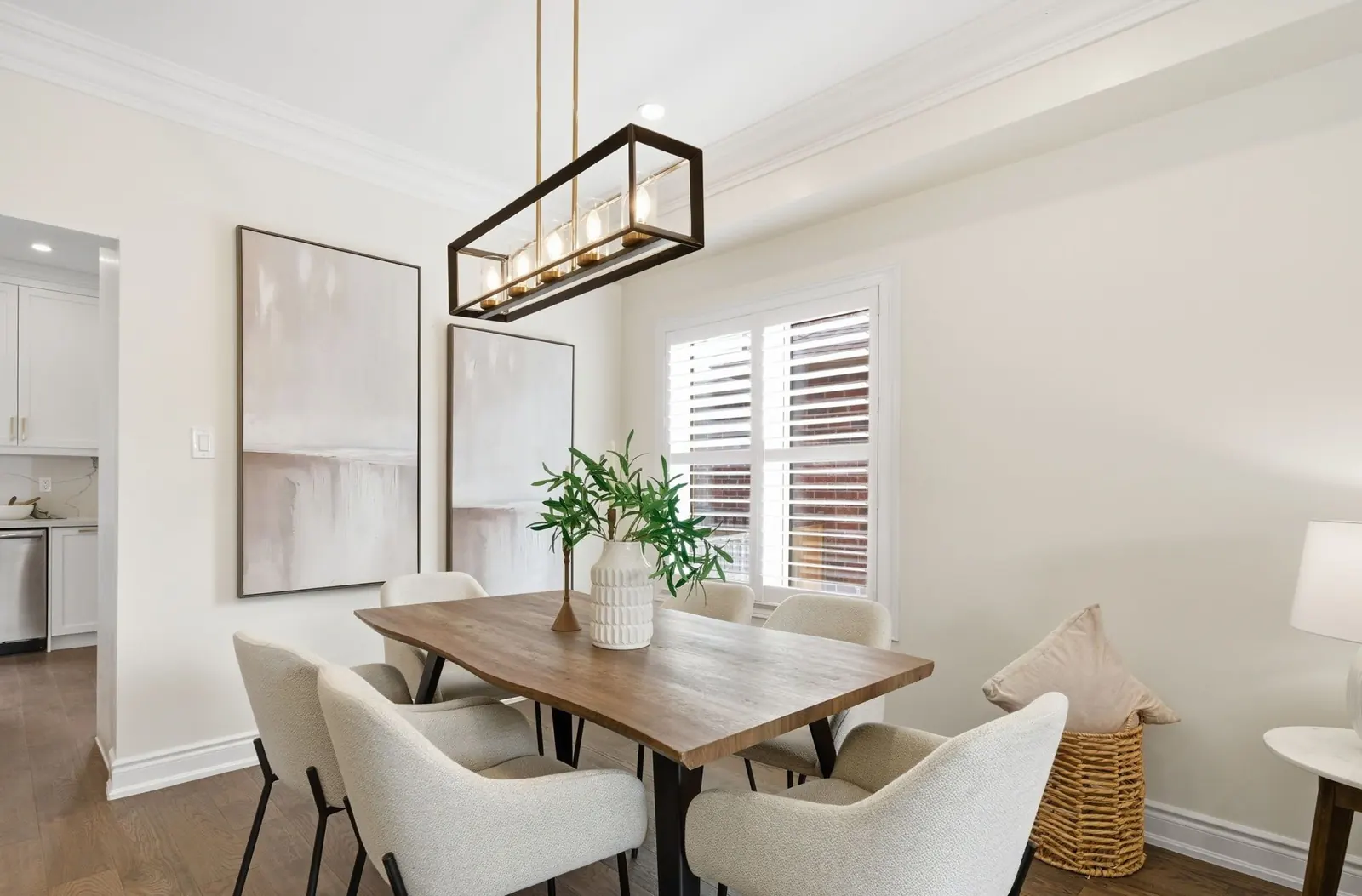
What's the difference?
Plantation shutters are solid panels with tilting louvres, mounted on a frame fitted to your window. You tilt the louvres for light and privacy, and swing the panels open when you want the whole window. They're part of the room, not something that hangs in front of it, and that finished look stays with the house.
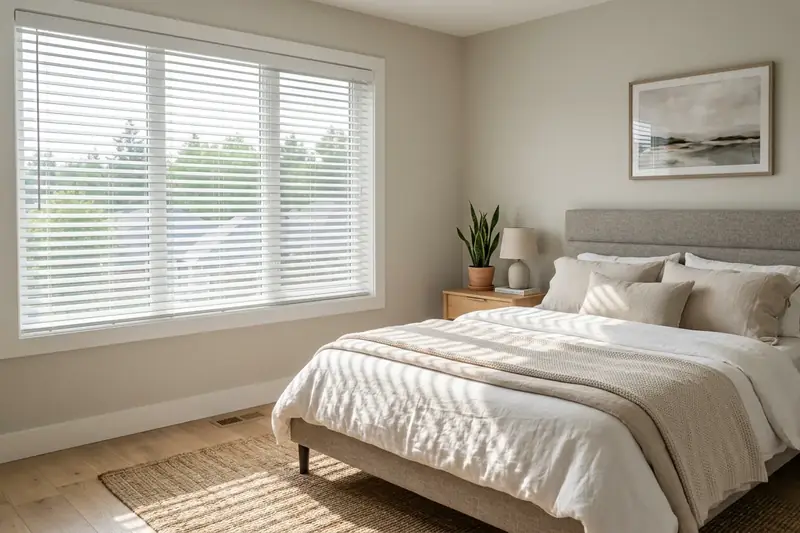
Wood and faux wood blinds are the classic horizontal blind with wide slats. You tilt the slats for light and privacy, and raise the whole blind when you want a clear view. Real wood brings natural grain and warmth; faux wood is a PVC composite made to look like wood that handles moisture.
Both give you the same basic control: tilt for light, close for privacy. The real differences are how permanent they feel, how they open, which rooms they handle and what they cost.
Side-by-side comparison
| Plantation shutters | Wood & faux wood blinds | |
|---|---|---|
| Price | About $20–$45+ per sq ft, by material | Quoted per window at your free consultation |
| How they open | Louvres tilt; panels swing open | Slats tilt; the blind lifts fully out of the way |
| Materials | Vinyl, composite, real wood (including premium oak or maple) | Real wood or faux wood (PVC composite) |
| Colours | White or off-white; stains on special request | A wide range of paints and wood stains |
| Slat size | Several louvre sizes | Slats from 25 mm to 50 mm |
| Kitchens & bathrooms | Vinyl or composite | Faux wood |
| Arched windows | Yes, adjustable arched shutters | No |
| Look | Built-in and architectural | Classic and familiar |
| Timeline | 2–4 weeks; real wood usually longer | Usually 2–4 weeks |
| Warranty | 5 years on product and installation | 5 years on product and installation |
Cost: what to expect
Plantation shutters cost about $20 to $45+ per square foot of window, before installation. Material makes the biggest difference: vinyl about $20–$25, high-quality composite $25–$35, real wood $25–$45, and premium woods like oak or maple from about $45. A typical 36 × 60 inch bedroom window (15 sq ft) comes to roughly $300 to $675 depending on the material. Our plantation shutters cost guide has worked examples for more window sizes.
Wood and faux wood blinds are priced per window at your free in-home consultation, based on the size of each window, real wood or faux wood, and the slat size and finish you choose. Faux wood is the more affordable of the two. Because we bring samples of both and measure every window on the same visit, you get a written quote for each option and can compare them line by line before you decide.
Most other custom blinds and shades run about $12–$20 per square foot, and some, such as roman shades, run $20 or more. See how much custom blinds cost for the full picture. Installation is quoted separately for every product.
Which one for which room
- Living rooms and front windows: shutters are a natural fit here. They look finished from the street and from inside, and the panels swing open for the full view.
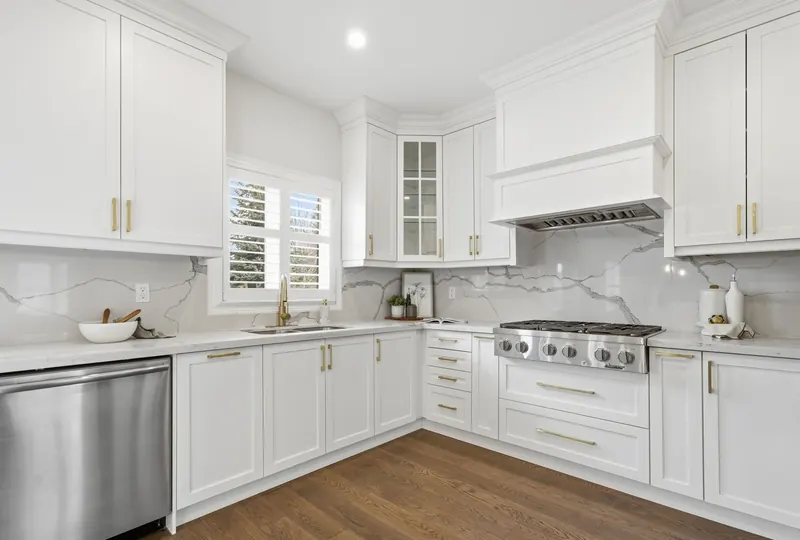
- Kitchens: vinyl or composite shutters, or faux wood blinds. Both handle steam and splashes over the sink and wipe clean.
- Bathrooms and ensuites: vinyl or composite shutters, or faux wood blinds. If you want daylight but no view at all, window frosting is another option.
- Bedrooms: either works. If the room needs to be fully dark, a blackout roller or zebra blind does that job better than slats or louvres; see blackout blinds.
- Arched and half-round windows: shutters. We make adjustable arched shutters; we don't make wood blinds for arches. See arched window coverings.
- Wide windows: real wood blinds are lighter than faux wood, which makes them a good fit for wider spans. For patio doors, see our guide to sliding patio door coverings.
Real wood, composite, vinyl or faux wood?
Shutters
Most of our customers choose vinyl or composite. Vinyl is the most affordable and handles moisture well; high-quality composite looks like painted wood and also handles moisture. Real wood can be painted or stained (stains on special request) and is best kept to dry rooms. Our shutters are made in Ontario.
Blinds
Real wood blinds have natural grain and weight and come in a wide range of painted and stained finishes; they're best in living rooms, bedrooms and offices away from humidity. Faux wood blinds are a PVC composite that looks like wood, won't warp in humid rooms, cleans with a damp cloth and costs less than real wood.
Using both in one home
You don't have to pick one for the whole house. A common plan is shutters on the front windows and main rooms, where the built-in look matters most, and blinds or shades in bedrooms, the basement and secondary rooms. Keeping one colour family throughout makes the mix look intentional.
See a full home of shutters in our Uxbridge project, or compare every option in our types of blinds guide. If you're in Brampton, our plantation shutters in Brampton page shows local installs and options; in Hamilton, see plantation shutters in Hamilton.
Frequently asked questions
Are plantation shutters better than wood blinds?
Neither is better everywhere. Shutters are a permanent, built-in covering that suits front windows, main rooms and arched windows, and they handle moisture in vinyl or composite. Wood and faux wood blinds suit people who want the slats to lift fully out of the way and a wide choice of stains and paint colours. Many homes use shutters in the main rooms and blinds elsewhere.
How much do plantation shutters cost compared with wood blinds?
Plantation shutters cost about $20 to $45 or more per square foot of window, before installation: vinyl $20 to $25, composite $25 to $35, real wood $25 to $45, and oak or maple from about $45. Wood and faux wood blinds are priced per window at your free in-home consultation, where you get a written quote for both so you can compare.
Which is better for bathrooms and kitchens?
Vinyl or composite shutters, or faux wood blinds. All three handle moisture and steam and wipe clean. Keep real wood, in shutters or blinds, to dry rooms like living rooms, dining rooms and bedrooms.
Can I get wood blinds or shutters for an arched window?
Shutters, yes: we make adjustable arched plantation shutters that tilt to control light. We don't make wood or faux wood blinds for arches.
How long do shutters and wood blinds take?
Most orders take 2 to 4 weeks from order to installation. Need them sooner? We offer rush orders on certain products, such as zebra blinds and roller shades; contact us for details. Real wood shutters usually take longer; we tell you the expected timeline before you order. Both come with Luna's 5-year warranty on products and installation.
Brampton, Hamilton, Mississauga & the GTA
Not sure which? See both at home
Book a free in-home consultation. We'll bring shutter and wood blind samples, measure every window and leave you a written quote for each option.
Keep reading